The United States’ weekend invasion of Venezuela and kidnapping of its president, Nicolás Maduro, forces a harsh reckoning upon Canada and the world. Until now (by which I mean this past weekend now), the unofficial policy of US “allies” – a word that in its current context has no meaning – has been to hope that Trump was an aberration, and that sanity would return to the US and the world upon his death or removal from office.
This fragile hope, tended to like a delicate flower, has underpinned all Canadian and others’ strategies, which can politely be described as a mixture of flattery, appeasement, and a leisurely distancing from the US. Canada and others countries, for the most part, have been acting as if the United States is a potential future threat, not an immediate danger to the international order itself.
That this delusion persisted even after Trump’s November 2024 re-election should be considered an historic mark against all those who indulged in this denial of reality at the cost of preparing on the scale needed to survive as democracies in a world in which the United States is, at best, unreliable and, at worst, a military and economic adversary.
Trump’s brazen violation of sovereignty and international law has shattered the liberal international order. Sovereignty – the idea that states should have supreme control over their territory (I’m simplifying a lot here) – and international law – the idea that states should follow agreed-upon rules (again, huge simplification) – aren’t just norms; they’re foundational, constitutional norms. If you change them, you change the entire game you’re playing. Take hockey sticks of hockey and replace the puck with a round ball and you’re still playing a sport, but it’s no longer hockey. That’s where we are now in global politics.
(As I’m writing this, Janice Gross Stein is telling Matt Galloway on CBC’s The Current, “The liberal international order is dead.” So you don’t just have to take my word for it.)
The US act of war against Venezuela is categorically different from the many, many other times it’s violated both international law and other countries’ sovereignty. This time around,Trump and co didn’t even bother to try to pretend they were following international law.
Hypocrisy is the tribute vice pays to virtue. The political scientist Stephen Krasner calls sovereignty an “organized hypocrisy”: it’s violated a lot, but it remained the fundamental organizing principle of the international system. As grating as hypocrisy is, its presence is the difference between undermining a norm that remains active, and one that’s been put in the ground. The US invasion was many things, but it wasn’t hypocritical. They’re doing exactly what they said they’d do, following a justification they set out in their just-released National Security Strategy: whatever they want, because they want to.
That’s how you kill a norm: by acting as if it doesn’t exist.
No going back
Trump’s re-election and his subsequent actions have set in motion events that will make it almost impossible to return to the liberal international status quo ante. The United States’ economic and military superpower status give it an outsized role in shaping global politics. Since World War II, it’s promoted sovereignty, multilateralism and the rule of law as constitutional principles. If the US no longe abides by these principles, the rest of us have to deal with it.
In the absence of a liberal international order, another politics will prevail. In this case, we’re likely heading toward spheres of influence – something that’s been in the cards since Trump I (see, e.g., Chrystia Freeland’s concept of “friendshoring”) – and might makes right.
Most importantly, if and when Trumpism (let alone Trump) is defeated in the US, any new administration will have to act in the world as it exists, not as it was in 2015. A weakened US, relative to rivals like China (which would be totally OK with a spheres of influence world), in a world of great power politics will almost be forced to act like a great power to satisfy its own economic, social, and security needs and appetites.
That’s what it means to lose the liberal international order. And Canada as a whole has yet to come to terms with the full implications of this loss.
Canada’s two-dimensional debate: All roads lead to integration
The Venezuelan invasion, as well as Trump’s follow-on threats to invade Greenland and Mexico, have reminded everyone that, Oh shit, Trump is an immediate and direct threat to the world.
Our leaders’ reactions to the invasion have been immensely, if dismayingly, clarifying, in a way that months of “elbows up” and nationalist rhetoric hasn’t been.
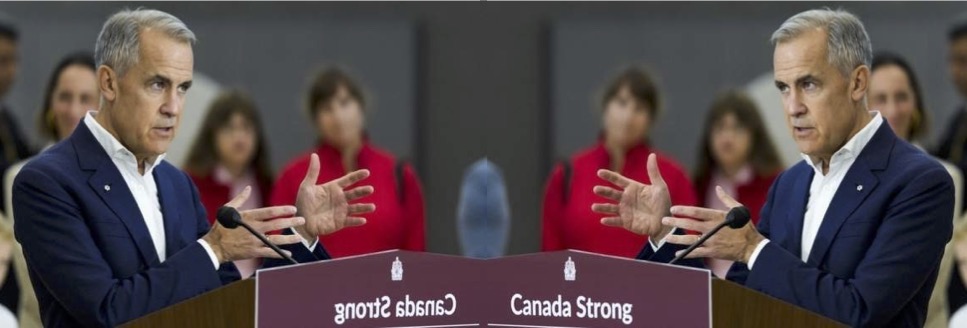
Let’s start with Mark Carney. In his statement, he called “on all parties to respect international law.” As many people have pointed out, he blatantly ignores (unlike Mexico) that the violation has already occurred. As many others have also pointed out, this kid gloves treatment is of a part with his actions in power, where he has gone out of his way to avoid offending or criticizing Trump or the United States on pretty much anything.
The Liberal government is anxious to do or say nothing that will offend the Trump administration, as Ottawa prepares to defend the vital Canada-United States-Mexico trade agreement. Rightly or wrongly, in responding to the American strike on Venezuela, Mr. Carney spoke softly and carried no stick.
In contrast to Carney’s timidity, Ibbitson remarked, “Conservatives cheered Mr. Trump on.” Pierre Poilievre offered “Congratulations to President Trump for the arrest of the narco-terrorist and socialist dictator Nicolas Maduro, who should spend the rest of his days in prison.”
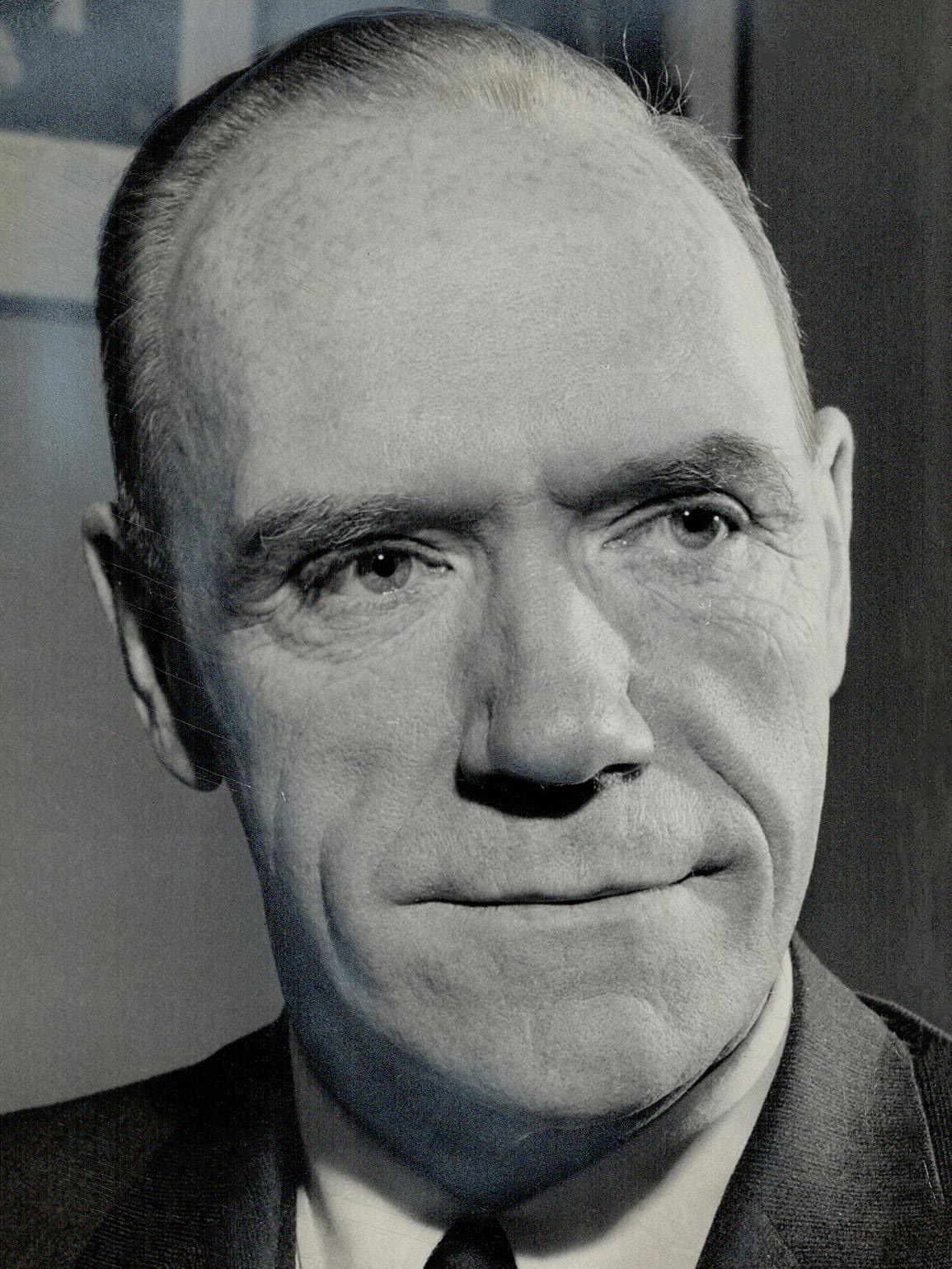
While their topic was ostensibly Venezuela, their two statements also reflect their views of how Canada should approach its relationship with the United States. Both statements actually map cleanly onto the taxonomy that Mitchell Sharp laid out over 50 years ago when discussing Canada’s options for dealing with the United States.
Option one: Reactive, adjust as needed to respond to US actions.
Option two: Deeper integration.
Option three: Transformative and strategic reduction of Canadian dependence on the United States.
Of the two, Poilievre’s views are clearest. His rhetoric clearly reflects a preference for Sharp’s Second Option: deeper integration with the United States, larded with a comfort with the fascist MAGA wing of US politics.
Mark Carney, at first glance, is a bit more difficult to place. His early rhetoric and claims of nation building via infrastructure, defence spending, trade agreements and, uh, slashing government spending, convinced a lot of people that he was a Third Option guy. But his ongoing refusal to call out the United States, or to risk upsetting the US on any sensitive file from telecoms and digital policy to border security and military cooperation, tells another story.
In reality, Carney’s policies are the very embodiment of Sharp’s First Option: a reactive approach that leaves the underlying status quo unchanged.
As Sharp noted, a reactive, status quo-focused First Option approach is fully compatible with pursuing policies like new trade agreements, if they don’t upset the underlying dynamics of the Canada-US relationship, which Carney is being very careful not to do. For example, caving on the Digital Services Tax (in return for nothing), entertaining the notion of joining the proposed US “Golden Dome” missile defence system (the literal opposite of distancing oneself from the US), refusing to change the US travel advisory to reflect the real danger to Canadians of crossing the border (even as US government agents have escalated to murdering civilians in broad daylight), and, most recently, a refusal to directly and forcefully condemn a blatant violation of sovereignty and international law that directly threatens Canada.
Even Carney’s military build-up is about buying more stuff, not challenging underlying Canada-US military integration. Neither Carney nor the Canadian military has gone so far as to identify the US as a potential threat or (more importantly) to take steps to reduce Canadian integration with US forces that have just shown us exactly how much they care about international law.
Or consider Carney’s mealy-mouthed statement on worries that the US might invade Greenland: “We stand with Denmark, we stand with Greenland, our closest partnership is with the United States, and we’ll work with everybody to make sure we move forward together.” As The Beaverton writer Clare Blackwood caustically noted on Bluesky:
i just don’t think you get to say ‘America wants our land, our resources, our water, our country. But these are not idle threats. President Trump is trying to break us so that America can own us. That will never, that will never ever happen’ in your election speech and then say stuff like this
The First Option, it turns out, is not that different from the Second. The big difference is that while Poilievre would openly embrace the United States in its current form, policy inertia would carry Carney, and Canada, to the same outcome: deeper US integration. From this perspective, the biggest difference between Carney and Poilievre is over the terms of integration, not the final destination.
In fairness to Carney, it’s significant that he has not yet signed any agreement with the United States/Trump. The most generous interpretation of his actions is that he recognizes that signing an agreement with an untrustworthy partner is pointless (though that didn’t stop him from axing the DST), and so he’s stringing Trump along until Trump dies or is removed from power, and sanity returns to the US.
Again, though, this approach suggests a bias toward a status quo that, as I’ve suggested, ain’t coming back.
Carney’s economic Maginot Line
The fundamental point remains: Carney’s extreme reluctance to challenge the United States on issues of core, conflicting interest to Canada and the US demonstrates a reluctance to challenge the United States in a way that’s necessary to actually protect Canadian autonomy, which Carney claims is his main goal. His are First Option, status quo policies dressed up as a Third Option transformation.
The distinction matters because it’s preventing a serious, informed debate about the future of Canada-US relations. By presenting his economic development policy suite as standing up to the United States rather than an attempt to maintain the status quo with a belligerent adversary, Carney is selling Canadians an economic Maginot Line. Carney’s policies, designed to promote productivity, attract investment, and stimulate growth are based on the assumption that the US threat is primarily economic and can be addressed through standard conservative economic policies.
But like the historical Maginot Line, these policies are facing in the wrong direction, neglecting the actual, political, threat: domination by an authoritarian giant in a transformed international system. No number of trade agreements or oh-so-clever pipeline deals are suitable for confronting the challenge poised by a neighbouring superpower that has claimed the right to take what it wants, and nothing Carney has proposed fits the bill. The challenge from the United States cannot be solved by increasing Canadian productivity, nor can the government austerity its way toward greater Canadian independence.
Needed: An actual Third Option
That Poilievre and Carney’s integration-friendly ideas are defining the contours of the Canadian debate is discouraging. Carney’s continued use of Third Option rhetoric while pursuing First Option policies has injected serious confusion into the overall discussion. As a result, we’ve had a debate using Third Option language (e.g., the relationship is over) to sell Carney’s First Option-style policies, but without actually considering Third Option-type ideas.
That needs to change. We need to expand the discussion to consider seriously Sharp’s Third Option: Actually taking steps to reduce Canadian dependence on the United States. This policy stance is, I believe, what Canadians thought they were voting for when they voted for Carney.
Pursuing a Third Option, as Sharp recognized, involves more than simply adjusting the amount we export to the US. It would require changing the basis of the relationship with the United States and the world. It would require, at minimum, serious, transformative, moonshot-styleamounts of money spent on infrastructure, not simply hurrying along projects already in the pipeline. It would require more, not less, spending on a higher-capacity federal government; and serious attention to governance issues, not simply depending on one man to make deals.
It would also require attention to questions regarding control over software and digital communications, including social media, as well as governance of the military and security services: not just buying more weapons, but ensuring that the military and security services aren’t simply an auxiliary of a US war machine that has already demonstrated a lack of commitment to international law and human rights.
A transformed world calls out for transformative policies, a Third Option-style attention to implementing policies that fit the world as it is, not as it was.
Thinking seriously about the challenges Canada faces with regard to an unstable, unreliable, imperialist United States would also involve an uncomfortable honesty about our situation that our leaders have been reluctant to provide, but which we must face:
We are trapped on a continent with a superpower that (to be generous to a fault) can no longer be counted upon to respect sovereignty, international laws or treaties. That needs certain things (resources, water, physical security) that we have or, in the case of physical security, are expected to provide.
Further: Unlike Ukraine, our strategic value to Europe is minimal, so we can’t count on anyone coming to save us.
Further: Whose economy, by design as well as “natural” inclination, is deeply integrated with that of the United States.
Making things worse, as Carney has likely intuited, attempts to distance ourselves from the United States in any meaningful way will be met with a pushback that Sharp could barely imagine, writing as he was at a time when our two countries shared common values like respect for democracy, human rights, multilateralism and the rule of law.
Those are the stakes, and the risks. They’re really serious, and really worrisome. But pretending otherwise or misdisagnosing the problem are surefire ways to ensure that we don’t act as we must.
Historically, deeper integration has been the easier, more attractive option for Canada. But the US slide into authoritarianism has increased the cost of such integration to include compromising core Canadian values, including self-governance and the rule of law. It also makes the need to pursue a Third Option almost a categorical imperative, no matter the cost.
We need policies that can realistically deal with the actual, deep challenges we face. Addressing and overcoming these challenges will require much more than a few trade deals, AI and a wind farm. We need creative policies and new ways of doing domestic and international politics.
It will also come with costs. The implicit promise in Mark Carney’s economics-focused agenda is that we can minimize these costs: that while Canada currently does not have the ability to resist substantively the United States, his plan will allow us to do so sometime in the future.
This is a false hope. The reality is, Canada will never be able to get to this promised land. There will always be a cost to defying the United States on anything they deem important. Given the intimate nature of the countries’ relationship, we will always face such sticking points. And almost by definition, so long as we’re in a might-makes-right world, any meaningful steps we try take away from them will be treated as a threat.
That doesn’t mean that pursuing a Third Option is impossible or that appeasement is our best strategy. Rather, it means that we have to honestly acknowledge that preserving an independent, liberal, human rights-respecting democracy in the northern part of North America comes at a cost, and go from there.
Canadians need to ask and answer three questions: How much is our independence, our liberal democracy, worth? Are Mark Carney’s policies really up to the task of protecting Canadian independence? And what would actual Third Policy programs, capable of protecting Canadian sovereignty, look like?
Below is a lightly edited presentation I gave last night for Brock University’s Centre for Canadian Studies, at the St. Catharines Public Library. Coincidentally, I delivered it shortly before Prime Minister Mark Carney gave a speech in Ottawa outlining his vision for the upcoming (grudgingly delivered) federal budget. His speech confirmed my main argument: Carney believes that the crisis facing Canada is that “the U.S. has fundamentally changed its approach to trade, raising its tariffs to levels last seen during the Great Depression.” Carney’s entire domestic and international policy agenda is consistent with this view.
Carney’s narrow understanding, however, mistakes the symptoms – erratic, irrational US economic policy – for the actual disease: the long-term collapse of the norms that made positive-sum cooperation and even harmony across all economic and non-economic aspects of the Canada-US relationship possible, including the rule of law in domestic and international affairs. It pretends that the US threat is purely economic, not political. Utterly ignoring the governance patterns, including military and regulatory cooperation, that sustain Canada-US integration, means that Carney’s economics-only policies will almost certainly lead to deeper integration with the United States.
In my presentation, I argue that Carney’s use of what I call the Third Option language of decisive breaks and “elbows up” disguises a pedestrian status quo-oriented agenda that has doubly robbed Canadians. By wrapping status quo policies in transformative language, Carney is making it difficult if not impossible for Canadians to have an honest discussion about the costs related both to deeper economic and security integration, and those related to the steps the country would have to take to actually protect Canada from an increasingly politically unstable and authoritarian United States.
First, I’d like to thank Anthony and the Centre for Canadian Studies for inviting me to give this talk, and the St. Catharines Public Library for hosting it. My first-ever volunteer job was at my local library, when I was nine or 10 years old. I can’t even remember how that happened, except that I’ve always loved books and loved being around books. So it’s always nice to work with our local library here in town.
It’s great to be here. But it’s also a very disconcerting time to be a political scientist, especially one whose background is in the study of Canada-US relations, with an abiding interest in the perennial question of the potential for Canadian sovereignty in the shadow of our southern neighbour.
When you study something deeply, you hopefully come to understand it. And this understanding gives you the ability, in a sense, to see around corners in your area of expertise, to see things before they might become obvious to others.
Right now, for political scientists, and particularly ones with my particular academic and professional background, US politics and Canada-US relations feel like a horror movie. You keep screaming at the screen, don’t go down to the basement, but of course they do and then the bad thing happens, just like you knew it would, because you’ve seen this movie before.
Consider the distance that Canadians have travelled in terms of the general understanding of the nature of the US crisis. When Donald Trump was first re-elected last November, I had to fight just to describe him as an “authoritarian” in the advertisements for a talk I was giving on Canada-US relations. Around the same time, I was disinvited from a radio call-in show, I suspect because I wanted to argue that Trump’s tariffs were a symptom of the deeper problem facing Canada, namely the rise of US authoritarianism.
It was annoying, but understandable. Really big changes are hard for people to process and can make them cautious. And last November, openly referring to the leader of what was previously the world’s leading democracy as an authoritarian still sounded like an overreaction to a lot of people.
But even at the time, in November 2024, seeing Trump as an authoritarian was not an outlandish view among political scientists, among those of us who study political systems in Canada, North America and around the world. As one of my Brock colleagues put it at the time, the only legitimate debate among political scientists about Trump was about whether he was simply an authoritarian or whether he was also a fascist.
As a discipline, our mood is pretty bleak. At the beginning of this crisis, I asked another Brock colleague a question: Given our current situation, and given what’s possible, what would constitute success for Canada? He got really quiet and after a moment said, I don’t like to think about that.
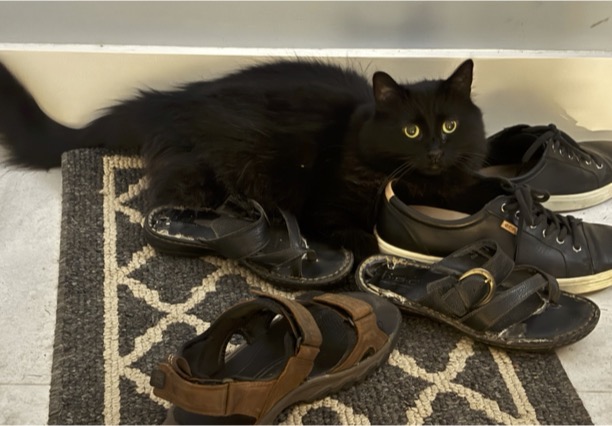
Amazingly, our visceral, grassroots reaction to Trump has continued. Travel to the US, especially of the non-business variety, continues its record declines. The boycott of US goods, especially at the grocery and liquor stores, continues. In our own household, the only US goods we regularly buy now are laundry detergent, because I can’t seem to find a made-in-Canada alternative, and cat food. Anyone with a cat will understand that there are some lines you just can’t cross.
The Emperor of Shoes.
And now Trump is kidnapping US citizens and exiling people to to foreign gulags, he’s harassing Canadians and others at the border, he’s taking stakes in US tech companies, he’s flouting the courts, and even tearing down the East Wing of the White House, to name only a few things. So these days you don’t hear many people saying, well, maybe he’s not an authoritarian. Political scientists like me are also getting less pushback when we refer to Trump as a fascist, which he is. Now, the conversation has moved on to whether there will even be free and fair elections in the US next year.
At least that’s the case in most corners. Because as much as I think most Canadians get that Trump poses an existential threat to Canada, there remains a disconnect between, on the one side, the vociferousness of Canadians’ attitudes and the ongoing grassroots boycotts, and, on the other, how the Canadian government is approaching our current situation.
Assessing the Carney Strategy
In the publicity materials for this talk, I said I would assess the Carney government’s strategy for dealing with Canada-US relations, and whether or not it’s meeting what I think is our common desired goal of maintaining Canadian independence, or sovereignty.
Well, it turns out that this is actually a pretty challenging assignment, for two reasons.
First, the Carney government – which is to say Mark Carney, since at this point he pretty much is the government – is remarkably tight-lipped about why they’re doing what they’re doing, both with respect to the US and his domestic policy. His government is making announcements and doing a lot of things, but they don’t really explain themselves. There seems to be little planning going on, in public or behind the scenes, just action.
For me, the most surprising thing about Carney, given his economics background, has been his extreme reluctance to even provide a budget. He had to be pushed to deliver one this year, in a couple of weeks, as opposed to next spring sometime. Or even to provide any deep econometric analyses justifying his many proposals, whether it’s regarding AI or his hand-picked infrastructure projects. This has allowed both critics and stans to speculate about what he’s actually doing and why he’s doing it.
But the second thing, as an increasing number of people have noted, is there appears to be a rising disconnect between Mark Carney’s professed goal of increasing Canadian independence, and his action regarding the US.
Behind the scenes, Chantal Hébert – who’s probably Canada’s most respected parliamentary journalist – has reported an air of panic in the government, as they seek to deliver any kind of agreement, preferably before the budget in a couple of weeks, and also less of a focus on technocratic policy than playing to the politics of their situation.
At the same time, though, the Prime Minister has also started a number of projects under the banner of “nation-building.”
These include proposing a number of infrastructure projects that he claims will strengthen the Canadian economy. Though it might be more accurate to say that he has re-announced programs that were already on their way to completion. And his plans seem to be moving Canada away from the possibility of creating an environmentally sustainable economy for our descendants.
He has engaged in trade talks with other countries, most notably Europe as well as China and Indonesia, even though Canada’s problem since the 1990s hasn’t been a lack of trade agreements but a lack of support for Canadian businesses seeking to break into difficult overseas markets.
He has also promised an orgy of defence spending while cutting taxes and seeking steep cuts in non-security areas.
So what can we make of all this? Is he selling out the country, as his critics would have it? Or is this all some 10-dimensional chess game designed to buy us time so that we can, at some point in the future, actually distance ourselves from the US?
The unacknowledged debate
I think a big problem for our understanding of what’s actually going on is that Canada is engaged in an unacknowledged debate over the nature of the US threat.
And our understanding of this debate isn’t helped by the fact that Carney’s more-nationalist rhetoric is on one side of the debate, while his actions and policy proposals are on the other.
So what are the sides of this debate?
The first side sees the US threat primarily, almost exclusively, in economic terms. From this perspective, the problem is an erratic, untrustworthy US president with a self-harming, and Canada-harming economic ideology. From this perspective, persistent uncertainty and an inability to rely on the US market for our ongoing prosperity is what we need to address. I believe Mark Carney and many key political and business actors fall in this camp.
In contrast to this view, the second side of the debate sees the unfolding economic disaster as a symptom of a much deeper, political governance challenge: the collapse of the conditions that allowed for decades of positive-sum economic, political and social cooperation that was the envy of the world, and the rise of authoritarianism and fascism in the US. From this perspective, any attempts to gain relief from superficial tariff issues will end up backfiring, and will end up increasing Canadian integration with a collapsing United States. I believe that most Canadians are on this side of the debate, and they thought that Mark Carney was, too. I’d also put myself in this camp.
Whether or not Carney’s strategy is up to the task depends on which view is correct. Tonight, I’m going to argue that Carney’s tariff-focused approach misunderstands and underestimates the scale and nature of the US crisis, which is authoritarian and fascist in nature, and will almost certainly outlast Trump. Far from delivering greater autonomy, it will create the conditions for greater dependence on an increasingly unstable United States. If Canada is to survive, we will need to undertake actual transformative change that does not shy away from a full, public discussion of the nature of the crisis and what addressing it will cost if we want to preserve our democracy.
That’s a tall order. But as daunting as our current moment is, at heart it’s just a very high-stakes version of the challenge Canada has always faced: what should our relationship with the United States be? Which means we can look to history for some guidance as to what our options are.
The old new debate
The Liberal External Affairs Minister Mitchell Sharp set out the modern debate way back in 1972. That era was also marked by international upheaval and a, shall we say, restless United States that wanted to change its place in the world. At that time, Canada was also considering its options regarding its relationship with the US.
Canada, Sharp argued, had three options: the status quo, deeper formal integration, or consciously seeking to distance ourselves from the US.
The First Option: The Same Old, Same Old
There was the first option, a modified version of the status quo. Policy in this approach would react to circumstances as they arose but wouldn’t involve any fundamental change to how things were done. This reactive element meant that it could involve things like trade diversification or taking steps to strengthen the domestic economy. But the key point is that it would be reactive and wouldn’t address underlying governance patterns that reinforce the status quo.
And because the status quo is driven by inertia toward deeper US integration, it would likely lead to deeper integration, intentional or not.
To give away the ending, Mark Carney’s approach to dealing with the US fits squarely within this First Option.
I say this for a few reasons.
First, none of Carney’s policies would have been out of place coming from any Conservative-leaning government over the past 40 years.
Tax cuts and government austerity have been part of that playbook for decades.
So has increased defence and security spending, the only area of government spending that conservative policymakers routinely embrace.
And signing trade agreements has been a bipartisan sport since the 90s. But as I said, the real challenge has been supporting Canadian businesses to enter non-US markets.
Second, Carney’s instinct from the very beginning, even when he was embracing that elbows up rhetoric, was to seek, in his words, a comprehensive trade and security agreement with the United States. He sacrificed the multi-billion-dollar Digital Services Tax in the quixotic pursuit of such an agreement. And renegotiation of the USMCA along with deeper military integration through the Golden Dome remain explicit objectives.
He has also ignored, or retooled to US advantage, key areas of US influence related to communication and digital policy (like social media regulation), regulatory cooperation, migration, such as the now-absurd Safe Third Country Agreement, and military cooperation. On that last point, it doesn’t matter where you buy your weapons if you’re still on Team USA, as Carney and the Canadian Forces have repeatedly said they are.
So that’s what I mean when I say that his approach is reactive.
The Second Option: Deeper integration
The second option, deeper formal integration, has been Canadian policy since the 1989 Canada-US Free Trade Agreement.
The payoff from deeper integration, as Sharp noted, was supposed to be greater certainty in the relationship and greater prosperity. And the second part arguably has worked out, mostly. However, he warned that once undertaken, it would likely be irreversible because of the links and dependencies it would create. What’s more, he noted that there was nothing keeping the United States from simply changing the terms of the underlying bargain whenever they wanted. This was also the argument of the anti-free-traders who fought against it in the 1988 free trade election.
In political science circles, this is also known as “The Vader Clause.”
For those of us who lived through that election, it’s cold comfort to know today that the free-trade critics were right, and that people who ridiculed them as deeply unserious people owe them an enormous apology. It turns out the critics were the clear-eyed, sober ones.
The Third Option: Charting a new path
Finally, the Third Option, formal reorientation of Canadian economy and society away from the United States.
This, I would argue, is what Canadians thought they were signing up for when they voted for Mark Carney’s Liberals. The Third Option involves a conscious and fundamental reorienting of the Canadian economy and society away from the United States. As we’ll see, it’s about more than trade. It involves creating new forms of governance to counter the integration-focused linkages and tendencies that have built up especially over the past 40 years.
The downside to the Third Option is the same now as it was then: It’s very expensive and requires a great deal of conscious effort, led by an activist government, to reorient Canadian society away from the US.
Desperately seeking certainty
The Second Option of deeper integration has become our status quo, so what we have in practice is an unacknowledged debate between the First and Third Options.
It’s been difficult to discuss these issues because the Carney government has been using the rhetoric of the Third Option while pursuing a reactive First Option. As a result, we haven’t had a full debate of either the consequences of deeper integration, or of the high costs that actually pursuing greater independence and protection from US authoritarianism would entail.
To give you a sense of this missing debate, let’s start with one word: Certainty. And a question: Should Canada renegotiate the United States Mexico Canada Agreement, or USMCA? Which is a question I asked in a Globe and Mail oped back in February. The answers people give are very revealing of how they view the US threat to Canada. And they nicely map onto the First and Third Options.
Quick reminder: the USMCA was the agreement Donald Trump negotiated with Canada and Mexico under duress in his first term, to replace the 1994 North American Free Trade Agreement, which he ripped up. Unusually for trade agreements, it mandates a renegotiation after six years from its implementation, which is next year, 2026.
Those in the First Option camp tend to see the US threat as primarily economic. Supporters of this position include the Business Council of Canada, Quebec Premier François Legault, Ontario Premier Doug Ford, the Carney government, and Mark Carney himself.
They correctly note that these tariffs, as well as Trump’s erratic nature, are a death sentence to an economy that has become ever-more integrated with the United States’, particularly since the 1989 Canada-US Free Trade Agreement. According to Scotiabank Economics, exports to the US were responsible for about 19% of Canadian GDP in 2023. So Canada has a lot to lose, which certainly weights on everyone’s mind.
From this perspective, uncertainty and an irrational US government that’s harming both US and Canadian economic interests is the problem. The main policy proposal from this perspective is for a renewed USMCA to restore the certainty needed for businesses to plan, invest and trade in the US market.
The bet here is that the US is acting irrationally and will come to its senses, either with Trump’s death or his removal from office. At which point even Republicans will come to their senses and realize that they’re better off working with Canada than always trying to undermine us and turn us into a 51st state.
The goal is certainty. Mark Carney said this directly last week when Stellantis moved its upcoming Jeep line to Texas from Brampton. [The quote: “Until a more certain trade environment for the North American Auto sector is established through the upcoming review of the Canada-United States-Mexico Agreement, decisions on new investments in the auto sector will continue to be affected.”]
We see this in Doug Ford’s Fortress Am-Can proposal, and of course in the overarching focus on renegotiating the USMCA.
We also see it in arguments made to preserve the Canadian auto industry, that correctly point out that the US auto industry would be weaker if it ceased to be integrated on a North American scale.
Auto industry arguments may not work this time
Since it’s in the news, I should probably address the auto industry directly.
Two things. First, the proposals and arguments I just mentioned are all arguments for deeper integration. A good economist would tell you that if you want to see what a person truly believes, look at what they do, not what they say. They call that “revealed preference.” Carney’s actions show that his revealed preference is for deeper integration.
The second thing is, a lot of people in the government and the auto industry believe their killer closing argument is that harming the Canadian auto industry would hurt the US auto industry, because it’s continentally integrated.
But I don’t think that argument is as strong as they think it is.
On the facts, this argument is absolutely correct. And twenty-four years ago, it wasn’t just correct, it was effective.
After George W. Bush slammed the border shut on September 11, 2001, it was the heads of the US auto industry who successfully lobbied him to reopen it to commercial traffic.
But that argument won’t necessarily work today, for two reasons.
First, it assumes that the US is most interested in economic prosperity. But even though Bush reopened the border for the auto makers on 9/11, in the long term the US – and this was a bipartisan consensus – thickened the border. This cost them directly in terms of increased security spending, but also in terms of foregone economic efficiencies and prosperity. The lesson here is that sometimes countries put other goals above economic growth. These goals don’t have to make sense to us, only to the people making the decision.
The second reason this argument isn’t as strong as it once was is that back then, the US democratic system was more or less functional. Politicians in a democracy don’t like recessions because they make voters angry. And shutting down Canada-US trade would cause recessions in those states that depend the most on Canadian trade. A recession would upset voters, who would take it out on their elected representatives. That’s why US politicians care about Canada-US trade.
But the US is no longer a functioning democracy. At the very least, it’s run by an authoritarian, and authoritarians, by definition, care less about what voters think than democrats. So that political-economic link is broken. In other words, it could be completely rational for an authoritarian US president to break the Canadian and the continental auto industry. Or even to keep tariffs in place at the cost of harming their own economy. Because the authoritarian political calculus differs from the democratic calculus.
However, if you believe that your opponent is economically rational, like you, then you’re going to miss that entire dynamic.
Carney’s big bet
If you believe that US economic policy is irrational and transient, and that the problem is uncertainty, you’re going to act in a certain manner.
First, you’re going to resist truly radical changes. The problem is uncertainty, not your underlying understanding of how economic prosperity is created. That’s not to say that you’re not going to do anything, but you’re not going to do anything out of the ordinary. You’re going to adopt a strategy of hedging your bets, not wholesale change.
Second, you’re going to play for time until sanity returns to the US, by which I mean they realize that they’re better off with us than without us.
Third, you’re going to try to seek certainty, by negotiating new agreements, like the USMCA or Fortress Am-Can.
Fourth, you’re going to tend to ignore non-economic areas of the Canada-US relationship, or see them exclusively through an economic or economic deal-making lens. Things like Canada-US military relations, social programs, the border, our communication infrastructure and our regulatory agencies become distinctly second-tier issues.
The Carney government is doing all of these things. And they make sense, so long as their underlying assumptions about the nature of the crisis are correct.
Certainty is impossible
Of course, the counter to this line of thinking is pretty obvious: any agreement signed by Trump obviously isn’t worth the paper it’s written on. Which means that any concessions that Canada offers will buy only temporary relief. At best. Until the next time. In other words:
Certainty is impossible. And we just have to deal with it.
This is the perspective underlying current support for a Third Option-type approach to Canada-US relations. From the perspective of those favouring the Third Option, the tariff chaos is a symptom of a deeper underlying problem: that the foundations that made possible decades of positive-sum Canada-US cooperation and even harmony have been destroyed, and replaced with a more authoritarian, hierarchical model of North American governance.
This means, at a most basic level, that expecting that a new USMCA can deliver certainty is wishful thinking, an example of cargo-cult policymaking.
I call it cargo-cult policymaking because the very conditions that made NAFTA, and deep military integration, and much else besides, possible no longer hold.
Deep Canada-US relations worked because of the presence of four norms.
First, US self-restraint. Its leaders over decades mostly understood that the US would be better off in the long run if they didn’t always play the bully.
Second, respect for the rule of law. Countries respect their legal and treaty obligations.
Third, respect for national sovereignty.
And fourth, a norm against linking problematic issues to other areas in the relationship. That norm made it possible to manage a hugely complex and intertwined relationship like Canada’s and the United States, so that even persistent problems like softwood lumber are treated on their own merits, and don’t end up derailing the entire relationship.
You can probably see where I’m going here.
Canada-US relations’ problems predate Trump and will outlast him
These norms no longer hold, largely because of Trump. But they were in trouble even before he showed up.
There have been more and more signals that trade agreements, that is, the Second Option, haven’t and can’t deliver the certainty promised us. As Sharp correctly noted, the US has always reserved to itself the right to change the conditions underlying North American governance at their whim.
We saw this after 9/11, when the US decided that no matter what NAFTA said, they’re going to prioritize border security over economic integration. That also jeopardized the Canadian economy and we had to scramble to react.
We also saw this after 2016 Trump election and the replacement of NAFTA with the USMCA. And we’re now living through a third shock.
The lesson from 24 years of experience should be that stability in Canada-US relations is an illusion, even when we’re dealing with non-fascist governments that are committed to cooperation.
US respect for the rule of law in general has also been declining for over a decade. Many of you in this room will recall how the US flouted international law over its invasion of Iraq and the many subsequent torture scandals. And that was followed by Barack Obama’s beginning of US undercutting of the World Trade Organization, by blocking specific appointmentsto its appellate body, which handles dispute settlements.
I mentioned the USMCA’s renegotiation clause a bit earlier. That clause is itself a direct example of the reduced US respect for international law. When you’re negotiating a treaty like this, everything’s on the table. But the whole point of trade treaties is that once you’ve negotiated one, it’ll protect the smaller country from coercion from its larger partners. So they can’t threaten our auto industry if we don’t do a deal on softwood lumber, say.
But if your agreement has a renegotiation clause, that’s as good as giving the larger country a veto over the smaller country’s social and economic policies, both those currently existing and those that we might want to put into place in the future.
For example, if you think that any online harms bill Canada might try to reintroduce isn’t being drafted with this chilling US pressure in mind, you’re in for a rude awakening. Again, this isn’t a Trump thing: Biden started the attack on Canada’s Digital Services Tax via the USMCA, and you can be sure that Harris would have done exactly the same.
So, the move toward coercive power as the norm in Canada-US relations has been building for a long time now.
And even beyond all that, there’s no reason to expect that an agreement can deliver certainty. Even if the Democrats somehow win in 2026, even if they take back the White House in 2028, Trump’s MAGA voters are still there. The Republican Party remains the only other viable party in US politics, and both are wholly authoritarian.
Which means that at some point, likely sooner rather than later, they will be back in power, and any Democratic laws and agreements will be ignored once the Republicans come to power, in 2, 4 or 6 years, and vice versa – too short a timeline to deliver certainty for business.
One other sobering thought: As US global power declines, and that’s pretty much inevitable now, Canada’s strategic importance to the US, for minerals and security, will only increase. Which will make it difficult for any president, Democratic or Republican, to allow Canada much leeway in its affairs, say by playing China or the EU off the US.
All this to say, Carney’s approach to economic reform is placing an enormous bet on economic rationality and certainty returning to Canada-US relations.
The upshot of this longer-term trend is that which means we can’t necessarily wait for the Trumpian fever to break and rational Republicans to take power. This is our new reality.
Notice also that none of this assessment really touches on the biggest problem, that the United States is quickly moving in the direction of becoming an authoritarian, if not outright fascist, country, full stop.
Authoritarianism is the problem
In the 1970s, support for the Third Option was driven mainly by economic uncertainty and a newly nationalist desire for a Canada that had recently celebrated its centenary to strengthen its national identity, to avoid becoming too American. Those were the stakes. The worry was that deeper integration would erode Canadian identity and harm us economically.
Those two things are still on the table, but the US descent into fascism, as well as the damage it’s already done to the rule of law and its regulatory agencies, have further raised the cost of deeper integration.
The United States of 2025 is not the United States of 1972, or 1988, or 2001. Formal and proposed deeper integration with a US from those periods at least was or would have been integration between two similar liberal democracies. That’s no longer on offer.
The United States no longer seeks to be first among equals, or even to have Canada as a junior partner. It seeks domination. Any agreement with the US will reflect those terms.
In the 1980s, for all of their problems and for all of the exceptions to the rule, the US and Canadian militaries could be said to share similar values related to respect for human rights and international law. That is no longer the case. The US military has already murdered Venezuelan citizens on the high seas. At what point will joint Canadian-American forces be involved in a similar situation? What of Canada’s respect for international human rights laws?
And that’s without getting into the F-35 fighter jets, whose very functionality requires that they be updated from the US before every mission. In other words, these jets will by definition always be under US, not Canadian, control.
Also, autocracy doesn’t tend to stay contained within its borders. Will the US tolerate dissent from a future prime minister?
The US tech and social media giants have already pledged fealty to Trump. Microsoft has said in a French parliamentary hearing that it would follow US law in turning over data on French citizens on its servers located in France to US authorities. This isn’t just a French problem. Pretty much every Canadian business, government and individual’s information travels over US companies’ networks or is stored on their servers. And given that the US administration has zero respect for due process, this should be very concerning to all of us.
What about US control over our social media? We’ve seen how social media can be manipulated to shape public opinion, or to cut off news sources in times of national emergency, as with the wildfires a couple of years ago. We should be concerned that our main information sources are now largely under US, authoritarian control.
Or consider how much of our health regulation depends on regulatory decisions made in the United States, by agencies that have been eviscerated by anti-science zealots. For example, some 85% of drug manufacturing site inspections of drugs supplying the Canadian market are conducted by foreign regulators, 60% of those by the US. The Carney government has been silent on these issues.
I’m only scratching the surface of how the US threat is actually a governance threat to Canada.
A Third Option for 2025 and beyond
If we want to adequately address the US threat to Canada, we need to take into account the entire interdependent relationship. This will require far more than the reactive approach of the current government. It will require changes in how we run our society and rethinking the government’s role. So what would following a Third Option look like?
I can only sketch out a partial answer tonight, but here is what you should look for in a response that fits the scope of the problem, a Third Option that fit our current circumstances.
First, we need to increase government capacity to plan and regulate. This is the most fundamental thing. We need more government, not less. Instead of spending its time looking for things to cut, the Carney government needs to charge the civil service with identifying areas in which they can expand and transform the economy, beyond the AI flavour of the month.
An austerity agenda treats government as a problem to be minimized, not as a catalyst for growth and to strengthen society. Canada Post is a good example of this. Rather than simply try to privatize its current functions, why not repurpose it as a postal bank, or give it a mandate for delivering public online services, such as a Canadian search that wouldn’t be reliant on Google?
The private sector isn’t up to this task of reforming the country because the market itself is in flux and remains tilted toward the United States. Government needs to provide greater support to Canadian business directly to help them to diversify their markets. Government also needs to engage in forward-thinking planning that goes beyond taking whatever years-old infrastructure projects happen to be on the shelf. We need government to take an actual leadership role.
We also need government to improve its regulatory capacity, to both set and enforce rules. We’ve depended on the US for this for too long.
All of this costs money to develop and deploy expertise. But it’s necessary. And you can’t do this under conditions of austerity.
Second, we need a whole-of-government and whole-of-country audit of Canadian digital vulnerabilities to US coercion. Cross-border internet traffic exposes Canadian communication to US laws (such as they are) and authorities. All of Canada – individuals, businesses, government, the military, security services – is highly dependent on US digital service providers that expose us to severe privacy and security risks.
Third, we need a healthy Canadian information ecosystem. High-quality information is the lifeblood of any democracy. It can’t be left to the good graces of US companies with ties to an authoritarian or any foreign government.
Fourth, economically, we need to start thinking about what we want the future economy to look like, and start planning for that. Right now the government is long on natural resource extraction, an industry of the past if ever there was one, and short on the services and education sectors that actually drive economies in the 21st century. Carbon is on its way out. China is driving a green economic revolution. We don’t want to be left behind. But if we keep betting on pipelines and LNG, that’s exactly where we’ll be. We need to go where the puck is going to be, not where it was.
Fifth, governments can be pro-active in shaping North American governance. The United States is transforming itself, and although authoritarianism has the upper hand, it won’t necessarily win. Canada should act with the understanding that consolidated authoritarianism south of us will be a death knell, not just for the Canadian economy, but our society.
That is our overarching national interest.
So we need to work to avoid that, to build a North America that will work in our favour. Franklyn Griffiths from the University of Toronto, had a really interesting suggestion in the Globe and Mail a few weeks ago: start building alliances and institutional frameworks with national and subnational pro-democracy groups through what he calls an Assembly for Democracy in North America.
This includes not just states and cities throughout North and Central America, including Greenland, but also First Nations, Métis and Inuit in Canada. In fact, reformed governance among Canada and the First Nations, Inuit and Métis is just the kind of creative response to a regional governance crisis that we could use. No group has been as resilient in the face of overwhelming adversity than Indigenous peoples. There’s something there to build on, in cooperation.
Finally, Mark Carney’s co-opting of Third Option rhetoric to pursue First Option-style governance has prevented us from having the hard national conversation that we need to have. We need an honest discussion of our options and alternatives, about the potential benefits and the costs. This is far too important to be left to a single person, let alone one who has an aversion to consulting with others. We need to hear from everyone.
Since February, I’ve heard so many good and doable ideas about how to improve the country, calls for everything from a Canadian youth civic corps, to retrofitting our infrastructure, to a cross-country rail system that actually works, to a new Canada Victory Bonds to raise money to pay for all of this.
But what we’ve gotten is a one-man show, and not a particularly imaginative one.
Some colleagues and I have been calling for months for a Royal Commission to work through all of this. That might sound staid and the kind of thing that only a political scientist could love. But Royal Commissions are the traditional means by which Canada has confronted and planned for big changes. And there’s no reason why one would have to take a lot of time, either, given advances in communication technology. But there is an allergy in Ottawa to thinking ahead.
We need to start this planning, not just to come up with a positive plan for the future, but to be honest with ourselves about the costs and the stakes. Here’s what I mean, and I’ll end with this.
The sobering conclusion
Mitchell Sharp’s writings in 1972 contained a chilling warning that puts our current situation into context.
At the end of the day, he wrote, the ability of Canada to follow any of these options, including the Third Option, depended on the benevolence of the United States. He didn’t see this as a problem because, as he wrote, the two countries were so similar and had such a coincidence of interests, on democracy and human rights and sovereignty and multilateralism and liberalized trade, that even Canadian assertions of greater independence would eventually be accepted.
But today, in 2025, we can no longer count on US benevolence. We no longer share these values. The US seeks dominance. And Canada remains of strategic importance to their prosperity and security. These are sobering thoughts that need to be factored into any of our plans.
But first we need to have that conversation. While it not might be clear to most people yet, Canada is still in reaction mode. We’re still in that horror movie, walking deliberately down the stairs into the basement, oblivious to the peril that every horror fan knows awaits us.
Originally published in The Hill Times, under the title Why Canada can no longer trust U.S. regulatory agencies. For all of Mark Carney’s talk about how Canada needs to reduce its reliance on the United States, he’s been conspicuously silent on the governance links that create and maintain our interdependence. Regulatory cooperation, as Natasha highlights, is a big part of these links. We need to start taking it seriously. That starts with coming up with a plan to deal with the fallout of the U.S. evisceration of its domestic regulatory frameworks.
President Trump’s August 1st firing of the head of the U.S. Bureau of Labor Statistics with a bad faith allegation of manipulated statistics is another critical attack by the U.S. government on the independence of statistical and regulatory agencies and on knowledge itself. Trump’s administration has declared war on the independent agencies that produce scientific knowledge on health, weather, climate, the environment, the economy, and space by cutting funding and cancelling programs, firing workers and demanding that the science produced reflect Trump’s ideologies. The U.S. government is dismantling the very state and academic institutions that made the United States a global data and knowledge powerhouse.
Alongside this ideological war on science, the U.S. government is razing its regulatory agencies, slashing decades of work regulating the environment and food safety in mere months. The Environmental Protection Agency, for example, is rolling back wastewater regulations for oil and gas development, lowering air quality standards, including on hazardous air pollutants, and, in a time of climate emergency, fast tracking fossil fuel projects. Meanwhile, the food system in the United States is in danger because of deep cuts and job losses at the federal agencies that oversee food safety, the Food and Drug Administration, the Department of Agriculture, and the Centers for Disease Control and Prevention. Policy expert Sarah Sorscher, at the Center for Science in the Public interest, contends the U.S. “federal food safety system is teetering on the brink of a collapse.”
The U.S. government’s wholesale destruction of knowledge and regulations is not solely a problem for the United States. It affects every country that relies upon U.S. data and regulations to inform their policymaking and regulatory efforts.
In Canada, Prime Minister Mark Carney, who was elected with a strategy of ensuring Canadian sovereignty and values in response to Trump’s repeated threats of making Canada a 51st state, had said very little publicly about the collapse of the U.S. regulatory state. Carney’s priorities are signing a comprehensive trade and security deal with the United States, bolstering Canada’s military spending, and dramatically cutting the federal spending and the federal civil service. Carney’s priorities, as other critics have noted, reflect a business-as-usual response to a now-authoritarian United States, not a recognition that the Canada-U.S. relationship has fundamentally changed.
Commentators have usefully pointed out that Canada can no longer rely upon the United States to comply with existing trade agreements, let alone new ones. However, what’s largely missing from public debates on Canada’s future with the United States is a consideration of what that relationship looks like when U.S. agencies’ data cannot be trusted and U.S. regulatory agencies are becoming partisan entities of an authoritarian United States.
Canada needs a sharp pivot away from its traditional regulatory reliance on the United States. Consider Canada’s dependence on U.S. health institutions for tracking infectious diseases, including avian flu and tuberculosis, and dealing with pandemics. What are Canada’s plans in response to the U.S. government’s cuts to their public health sector? This is a critical situation given that U.S. cuts have crippled its responses to public health emergencies, posing “immediate and long-term risks to the health of neighbouring countries and to global health,” according to a recent editorial in the Canadian Medical Association Journal. Canada, the editorial contends, needs to strengthen public health and disease surveillance systems nationally.
More ambitiously, Canada could step in where the United States is abdicating its role in public health. The United States plans to cancel US$500 million in funding for mRNA vaccines, including those that have been safely and successfully used to counter Covid-19. Canada could pour funds into scientific research in Canada to attract key scientists, academics and health professionals to ramp up vaccine research and production in Canada. This would also require extensive and sustained investment in Canada’s research funding programs and university system, which has been hobbled by decades of underfunding.
Now is not the time for the Canadian government to be slashing the federal public service, which will weaken regulatory capacity domestically. Instead, we have an opportunity to boldly reenvision Canada by strengthening our academic and scientific research and, crucially, building a world-leading data and regulatory capacity.
Since US voters re-elected Donald Trump in November, I’ve been arguing that the primary threat to Canada isn’t from his tariff policy, but from the fact that he’s dynamited the foundations of trust and certainty that have supported Canada-US cooperation for decades. Due to chronic US domestic instability, this trust is likely gone for years, if not decades.
The implications of this point are as clear as they are disturbing: North American relations are no longer based on sovereign equality and cooperation, but on hierarchy and dominance. Any negotiated agreement with the United States under these conditions won’t be worth the paper it’s written on. Any concessions offered by Canada would secure only temporary relief, to be withdrawn the moment it inconveniences the US. Such an agreement would serve only to bind Canada further to the United States, not as a junior partner, but as a vassal.
More concretely, as I argued in February in the Globe and Mail, it makes no sense to sign any agreement with the US under these conditions.
For these reasons, Mark Carney’s consistent strategy since before the election to pursue “comprehensive negotiations about a new economic and security relationship” with the United States has never made a lick of sense. He’s proceeded as if the problem is the tariffs, and that Canada could get a good deal if he could just convince the US that we’re stronger together than apart. North America Strong!
As I note in the Globe article, that would be a plausible argument if it were 2015. But thanks to Trump, “North America” no longer exists. There’s no more “we”: just “us” versus “them.”
Carney’s approach made no sense from the start. The reality of our situation, however, as well as the negative consequences from Carney’s strategy, may finally be starting to sink in. Carney has admitted that tariffs are likely here to stay, while BC Premier David Eby says that Canada and the US might not even be able to come to an agreement.
A wild goose chase
Let’s be clear: The entire pursuit of a “comprehensive” trade and security agreement has been a wild goose chase. It simply can’t deliver the certainty Carney obviously thinks it can. As Matthew Holmes, head of public policy for the Canadian Chamber of Commerce, points out in today’s Toronto Star, Trump. Simply. Can’t. Be. Trusted: “I think even if we get a deal Aug. 1, we could see him announce more tariffs on Aug. 2, or Aug. 7.”
And again, to repeat, the only way to get an agreement is to offer concessions in other areas – remember how Carney sacrificed the Digital Services Tax in exchange for the opportunity to continue negotiating a non-binding agreement with a serial liar? – that will buy us nothing lasting.
The problem is the uncertainty of an adversarial neighbour, not the tariffs.
To make matters worse, this wild goose chase has prevented Canadians from having the actual tough domestic discussions that are needed to actually get through all of this.
As Érick Duchesne and I explain in this just-published Policy Options piece, Carney’s “nation-building” projects are simply “a tired mix of recycled ideas and pet projects that could have come from any government over the past four decades.” Tax cuts, slashing government, cutting regulations, building a pipeline (which will take a decade and will deliver a product facing declining demand), ramping up military spending: These policies could’ve been introduced by pretty much any government over the past 40 years. This is inertia masquerading as innovation.
Flawed US policy, disastrous domestic policy
It would be a mistake to separate Carney’s fatally flawed US negotiation strategy from his domestic strategy: free trade (for Canada, free trade means free trade with the US) and minimal government are two sides of the same coin. The one implies the other.
For Carney’s government cutbacks to work at all (i.e., not decimate the country) would require stable access to the US market. Without that access, Canada’s entire economy, developed based on the assumption of continued market integration, is at risk. For example, it’s not clear at all to me that the Canadian auto industry – fully integrated into a North American (now US) market, starting with the 1960s Auto Pact – can survive under conditions of uncertainty. Canadians and Canadian businesses, dependent on digital infrastructure dominated by US tech companies that have bent the knee to fascism, are similarly vulnerable.
A government in cutback mode, one looking to cut corners, is likely to blow out the budget to provide haphazard relief to industries perceived to be deserving of aid. What such a government won’t do – and what is desperately needed – is to get active in developing a new economy that’s more resilient to US capriciousness.
We need government to do the exact opposite of pretty much everything Mark Carney is currently doing. We need bold, innovative thinking in government. We need more government, not less. We need governments with an industrial strategy beyond “Put AI in Everything” and leaving infrastructure planning to the private sector and the provinces to propose whatever’s on their pre-existing wish lists.
The depressing lack of imagination and vision demonstrated by the Carney government, and the provinces, is matched only by the imagination and creativity of Canadians, who understand what’s at risk, and that this is the time for boldness.
We highlight a few of these ideas in our oped – redoubling education spending to build up the knowledge economy, Canada victory bonds, addressing Canadian tech dependency, a youth climate corps – many of which we borrowed from the many Canadians who are rising to meet the moment. All of these are viable proposals for new and needed services, and creative, nation-building financing.
And where are the big swings internationally? Canada, trapped in North America alongside our dangerous neighbour, needs to make ourselves indispensable to the rest of the world. Why aren’t we making a play to relocate the UN to Montréal? Buying all the guns isn’t the only path to security.
Rejecting the old ideology
Minimal government, free markets, deregulation, free trade (or “almost free trade,” an Orwellian turn of phrase adopted by Carney as he’s scrambled to explain his US strategy): this has been the economic orthodoxy for the past 40 years. But the free trade era is over. “Almost free trade” is not free trade. And minimal government is completely inappropriate for our current moment. To continue to pursue policies developed for a world that no longer exists isn’t leadership: it’s ideological inertia.
Uncertainty in Canada-US relations is here to say. A new agreement won’t help. It will be very expensive to reorient the Canadian economy. Doing so will require more government capacity, not less. Canadians are ready for the challenge. They – we – have great ideas about how to improve our resilience. They need to be heard, and heeded.
I had to laugh when I heard yesterday that the Macdonald-Laurier Institute and the Center for North American Prosperity and Security is pitching a “Grand Bargain” between Canada and the United States. Apparently, according to the report’s emailed release, “the crisis in US-Canada relations presents an unprecedented opportunity to forge a transformative agreement that goes far beyond traditional trade deals.”
It’s a terrible idea, for obvious reasons. It pretends that Donald Trump is a rational actor interested in maximizing US security and prosperity (he’s not) and that the US isn’t descending into chaos at best and long-term authoritarianism/fascism at worst. Neither is conducive to any kind of agreement that respects Canadian sovereignty, let alone a comprehensive trade and security agreement (which just happens to be what the Prime Minister is also trying for) that would make us a subservient/vassal state to a country that doesn’t respect human rights or the rule of law. See myGlobeand The Conversationarticles for a recapitulation of this argument, though hopefully it should be evident to most people why you can’t trust an authoritarian liar.
Memory-holeing 9/11
But it also brought me back to the very beginning of my academic career, prompting a laugh of rueful recognition. Because this is very much not a new idea for an unprecedented times. It is very much precedented.
In the early 2000s, reacting to the US response to the September 11, 2001, terrorist attacks, the CD Howe Institute went big in favour of exactly this same policy. The situation was very similar: US actions (in this case, a reprioritizing of security over economics at the border) threatened Canadian access to the US market, upon which a decade of free trade had made the country increasingly dependent. In response, a cadre of Canadian intellectuals and pundits essentially panicked, arguing that we would have to do whatever the US wanted on security in order to secure our economy.
As it happens, it was this debate over whether deeper integration was a good ideal that convinced me to leave my job as an economist at the Parliamentary Information and Research Service (which provides non-partisan research services for parliamentarians and parliamentary committees) to pursue a PhD in Political Science. I wanted to learn if Canadian policy autonomy was, in fact, as restricted as Dobson and Granatstein’s proposals suggested, that we had no choice but to do whatever the US wanted.
The short answer is, no, as experience quickly demonstrated. Canada got through the crisis by addressing US security on its own terms, while also working to pursue common interests in managing the economy. No grand bargain needed. (I turned my dissertation into a book, if you’re interested.)
What did the grand bargain people get wrong? Basically, I would argue, the foundations of the North American relationship, in this case specifically the norm regarding non-linkage of issues. Plus, if you think about it for even a moment, the idea of trading security for economic access is absurd. Canada can’t credibly threaten to hold US security hostage to a better economic deal at the border.
Also, they overestimated the extent to which, in the words of the US ambassador to Canada at the time, Paul Cellucci, “security trumps trade.” Both are important. The US, not least President George W. Bush, understood this. When the US slammed the border shut on the morning of September 11, 2001, it was the US auto companies that convinced Bush to immediately re-open the border lest their entire industry collapsed.
(That Trump’s continued with his tariffs despite the self-harm it’s causing to the US auto industry is as good an indicator that “North America” as a joint, shared economic space, no longer exists.)
In other words, there was no need for a strategic, or grand bargain, or a friendly agreement in advance. There’s always been a constituency for deeper integration with the United States, as these 2002 proposals showed. But deeper integration represented a choice, not a necessity.
Not that you would know any of this history from the Macdonald-Laurier report. The entire 2000s are conveniently and completely absent from this paper: it skips straight from 1988 and the signing of the original Canada-US free trade agreement to the Trump era. This, even though the early 2000s are directly relevant to their proposal. They completely ignore it.
Again, these previous proposals in response to the last US crisis isn’t something that happened in the 1800s. This debate occurred (and was lost) 24 years ago, well within the lifetime of most Canadians, including, I’m assuming the report’s authors, and, I’m certain, the CNAPS Advisory Council.
Misguided idea then, indefensible idea now
Fast-forward to 2025, and these grand bargain ideas are even less defensible. In 2002, one could plausibly argue that while deeper economic and security integration would tie Canada even more tightly to the US mast – an issue that’s been recognized for decades (not that this report is concerned with that history, either), the United States and Canada at least shared foundational values: democracy and respect for human rights, the rule of law, sovereignty and multilateralism. We’d be a junior partner, but to a country of laws and human rights that shared fundamental national interests, e.g., in promoting multilateralism.
That’s no longer the case. In 2025, any grand bargain or comprehensive agreement would involve tying ourselves to an authoritarian-leaning (at the very best) country that has rejected all of these values. There is no bargain between equals on offer. Given the fact that the Republican party has gone full authoritarian, the most Canada and the rest of the world can hope for is years and years of chronic instability as successive Republican and Democratic administrations reverse their predecessors’ laws and agreements. The worst is Canada being forced into vassal status underneath a regime designed for domination, not cooperation.
And if you think that the United States of 2025 can muster the two-thirds majority in the Senate needed to approve any treaty, let alone a treaty like this, you’re out of your ever-loving mind.
In short, As Wilfrid Laurier University Professor of Political Science Jörg Broschek pointed out on Bluesky, the conditions that made comprehensive agreements such as the one proposed here no longer exist. To think otherwise is, as I note in my latest Globe article, cargo-cult policymaking.
Look: Canada is in an incredibly difficult situation. But ignoring past experience and present political realities is a surefire recipe for bad policy. We need policies that respond to the reality of our situation, not to the dream of how we wished things were. Grand Bargain proposals like this should be left on the scrapheap of history.


 Blayne Haggart's Orangespace
You must be logged in to post a comment.